

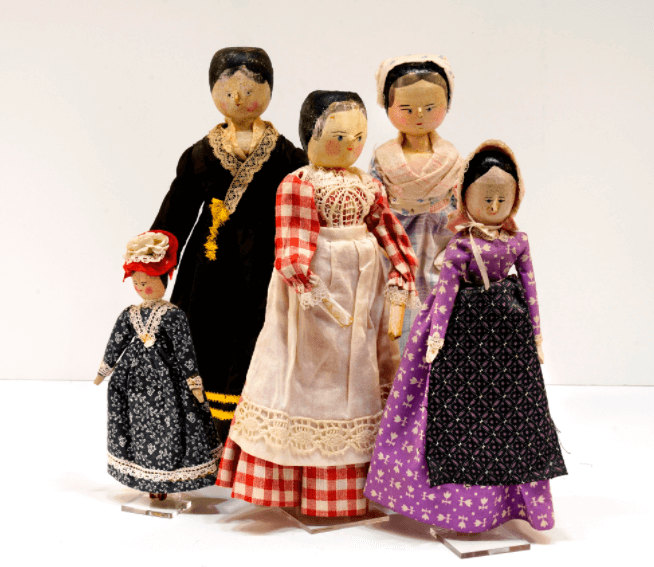
Rahmi M. Koç Museum is hosting the ‘World Dolls Exhibition’ as of September 28. The exhibition, which sheds light on the journey of dolls, the most important milestone of the toy industry, from the Antiquity to the present, is extraordinary, from wooden dolls of the 18th century to rag dolls of Anatolia, from Asian and African faith dolls to fashion dolls, and even to festival dolls in a silk dress from the Far East, presents a selection to its visitors.
From ancient times to the 21st century, babies are objects of belief and culture, as well as children’s toys. While in the West, there were wax dolls used for witchcraft in the Middle Ages, wooden dolls with ornate lace dresses appear with the Renaissance, made for the fashionista curiosity of noblewomen. The dolls produced by the local peoples of different geographies with traditional methods are replaced by dolls that are mass-produced from porcelain and plastic in large factories and that are produced at a lower cost with the industrial revolution.
The “World Dolls Exhibition”, curated by Rahmi M. Koç Museum’s Restorator Serra Kanyak, after a comprehensive and meticulous preparation process spanning three years, will present the “World Dolls Exhibition” from wooden dolls of the 18th century to rag dolls of Anatolia, Asia and Africa. It offers a special selection of different types of dolls that have entered the literature, from belief dolls to fashion dolls, from horror dolls to traditional world dolls, and vending dolls. The exhibition both explains the usage purposes of the baby concept since prehistoric times and opens up the experience of the visitors to the great transformation of the baby industry over the centuries.
“Not to mention baby”
The founder of the museum, Rahmi M. Koç, pioneered the “World Dolls Exhibition”. Included in the project the dolls in his personal collection to be exhibited, Koç bought various dolls to make up for the deficiencies during his travels abroad. Koç’s personal collection includes 18th-century Neapolitan dolls, 19th-century Asian dolls and puppets, and precious porcelain dolls, automaton dolls, Santon dolls and puppets dating to the early 20th century.
Stating that babies should not be viewed as just toys, Koç said, “While museums used to hold exhibitions only on their own fields of expertise, now they open exhibitions on almost any subject that may be of interest. At first glance, it may be thought that the doll exhibition has anything to do with industrialism, but it should not be forgotten that toy making is an industry on its own. We, as Rahmi M. Koç Museum, wanted to bring movement to the people of Istanbul and our regular visitors in a different lane in our quarter-century history. On this occasion, we discussed the subject of baby, which is very broad and deep. No matter what kind of doll it is, in which country it is made, no matter what panacea it is, doll making is an art and industry in itself with its clothing, quality and presentation. It is a reflection of the culture of the country. After three years of hard work, purchasing, borrowing, gift-giving, in-depth research and various travels, we were able to put this exhibition together. I hope that our visitors of all nationalities, all ages, girls and boys, will visit our exhibition with curiosity and admiration, and on this occasion, they will learn a lot about babies. After all, we were all babies one day, loved and experienced that little phase. Therefore, we should not say ‘baby’,” he said.
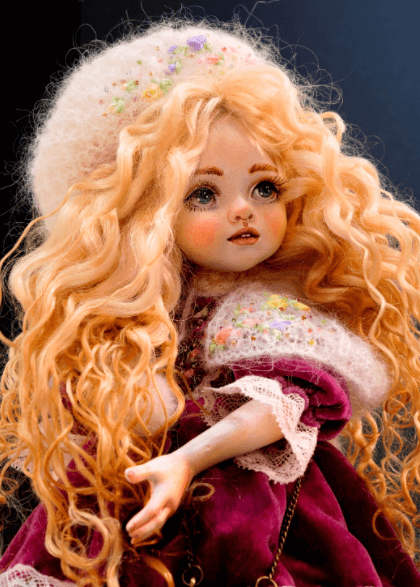
Curator Serra Kanyak shared information about the exhibition’s formation process spanning three years and the objects in the collection. Kanyak said: “When we decided to organize a doll exhibition, there were already various dolls in Rahmi Bey’s personal collection and in the collections of the Istanbul and Ankara Rahmi Koç Museums. However, in order to create a ‘World Dolls Exhibition’, it was necessary to have a much larger collection. First of all, I researched the subject of ‘What is a baby?’. I identified our shortcomings in order to obtain different types of dolls that entered the world of baby literature, and then, together with Rahmi Bey, we started to collect the missing dolls in our collection. Rahmi Bey bought many dolls from Sweden, France, England and America. I also travelled to Germany, Sweden, Switzerland and Russia to research and buy babies; I visited various museums, exhibitions, antique and vintage markets. We bought the missing dolls in our collection by following various auctions in England and America. As this process continued, our collection was enriched with the donations of our close museum friends and the dolls they lent. The supply of the main collection constituting our exhibition was completed in 1 year, but our total preparation time was three years with the work we did to get it ready for the exhibition. We also present a historical story in the exhibition, in which we chronologically convey the purpose of using the concept of the baby since prehistoric times. We are happy to have created such a comprehensive collection. I would like to thank everyone who contributed, especially Mr Rahmi M. Koç. I hope our visitors will also leave our exhibition happy.”
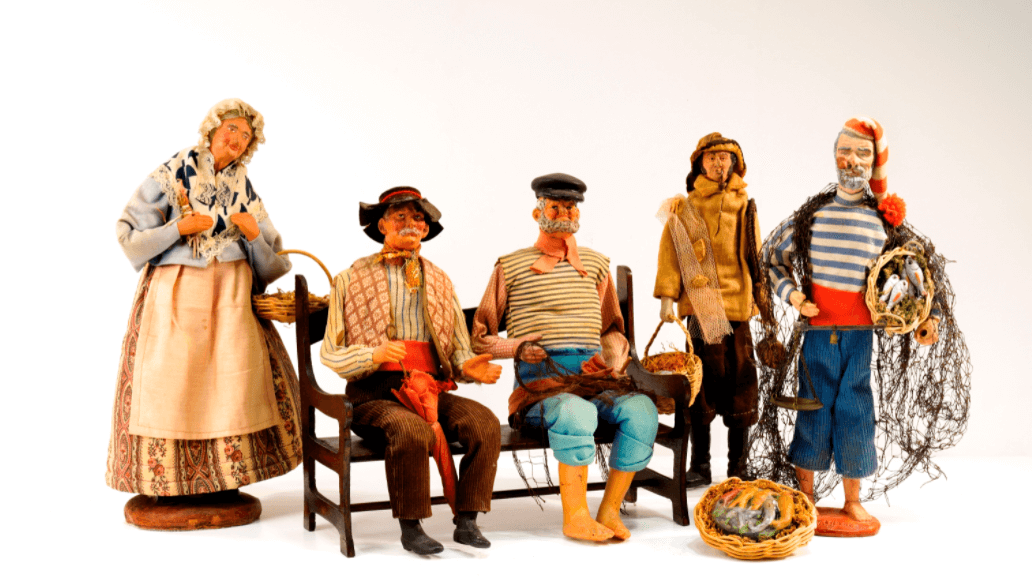
The main sponsor of the exhibition, Zen Pırlanta Board Member Şükran Güzeliş said, “We have had very good collaborations with the esteemed Rahmi M. Koç Museum over the years, and our relationship has now turned into friendship. In this sense, we have undertaken with great pleasure the main sponsorship of the World Dolls Exhibition. I liken them to jewels because they represent a temporal bridge between the past and the future. In fact, jewellery is a bridge built in the present, connecting the past and the future. This bridge carries meanings, values, happiness, but also principles, care and diligence. The skilful craftsmanship required in making dolls is also essential in making jewellery. When we look at handmade dolls, we see that there is a great effort, creativity and fine craftsmanship behind each one, just like in jewellery making. We are very happy to be the main sponsor of this exhibition, which allows us to see babies, who have a very meaningful place in our lives, from a historical and cultural perspective.”
About Rahmi M. Koç Museum:
Rahmi M. Koç Museum is the first and only industry museum in Turkey that reflects the developments in the history of transportation, industry and communication. Rahmi M. Koç Museum, which is the only address that can offer culture and entertainment together with its collection consisting of over 14 thousand objects, education and workshops for children, currently has an area of 11 thousand 250 m2 with two historical buildings, the Mustafa V. Koç/Lengerhane building and the Hasköy Shipyard. It has a closed area and an open area of approximately 17 thousand square meters. The museum can be visited between 10.00 – 17.30 on Tuesday-Friday, and between 10.00 – 19.00 on Saturday-Sunday.









Be First to Comment