

During the excavation of the 2,000 – year-old ancient Roman Theater in Bursa’s Iznik district, the tile workshop, which was dated to the Ottoman Period, was found for the first time, with a furnace firehouse glaze furnace, quartz crushing stones and all stages of production.
The archaeological excavations and research works of the Roman Theater continue on an area of approximately 15 decares, with the permission of the Ministry of Culture and Tourism, under the presidency of the Iznik Museum Directorate, with the support of Bursa Metropolitan Municipality and with the scientific consultancy of Dokuz Eylul University. Head of the excavation, Dokuz Eylül University Faculty of Letters, Archeology Department Lecturer Assoc. Dr. Aygün Ekin Meriç said that the building in Iznik was one of the rare theatres built on a flat area during the Roman period and raised with vaults. Stating that the theatre was built in the 2nd century during the reign of Emperor Trajan, with a capacity of 10 thousand people and three floors, and that it had a very ostentatious vaulted infrastructure, Meriç said, “Gladiator games and famous games of the period were played here, especially in the 2nd and 3rd centuries. Especially after 325, when the Ecumenical Council was convened, it changed its function and was primarily used for religious purposes. Meriç pointed out that tile kilns were started to be built in this area when Iznik was the capital of the Ottoman Empire and said that the masters in Iznik, which is very famous for tiles, worked in this region from the 14th century to the 17th century.
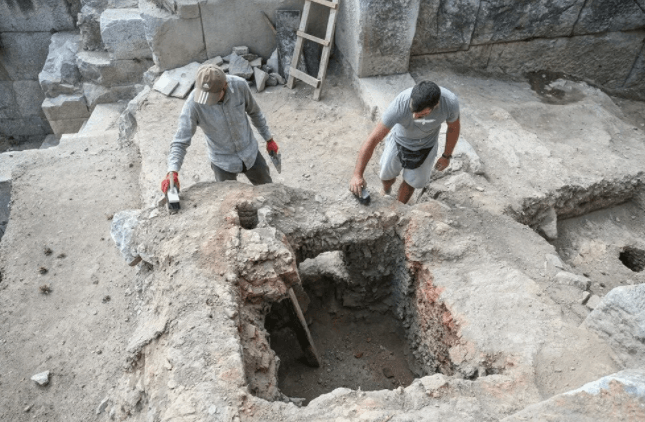
Stating that they found ten tile kilns in the excavation area during the excavations, Meriç shared the following information: “In the best condition of the vault carrying the sitting steps, we reached a tile workshop dated to the 14th-15th centuries. This workshop is very important. It is a well-preserved, very beautiful one. We have an oven. We can understand that this oven has been used for a long time from the burns that occurred as a result of use.”
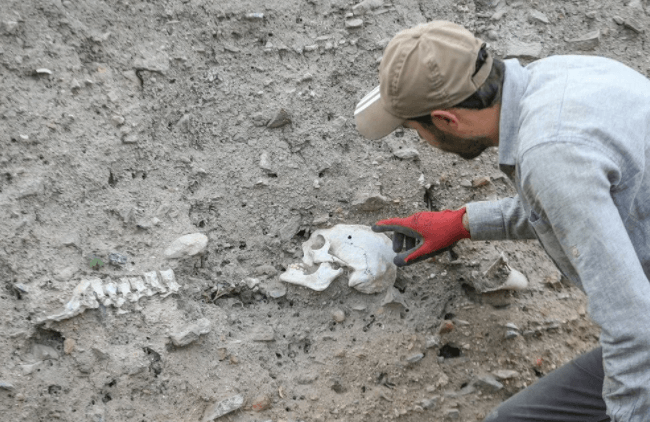
Giving examples of these, Meriç said, “For example, there is the Gothic Invasion in 258. During the excavation of the first sitting steps of the theatre, we found many graves. These graves were found dead during the war. There are no arms, there are wounds, wounds are seen on the skeletons. The use of the cemetery has always continued. “We found a baby skeleton in an amphora in an area we excavated this year,” he said. Explaining that they found another skeleton dated to the late period in an earthen section outside the theatre, Meriç informed that the structure, which is estimated to belong to an adult male with a height of 160 centimetres, will be exhibited without being removed from the soil.
Meriç added that from now on, they would work as an annual excavation and that, with the support of the Turkish Historical Society (TTK), four archaeologists, an art historian and a restorer will be included in the works in the future.





Be First to Comment