
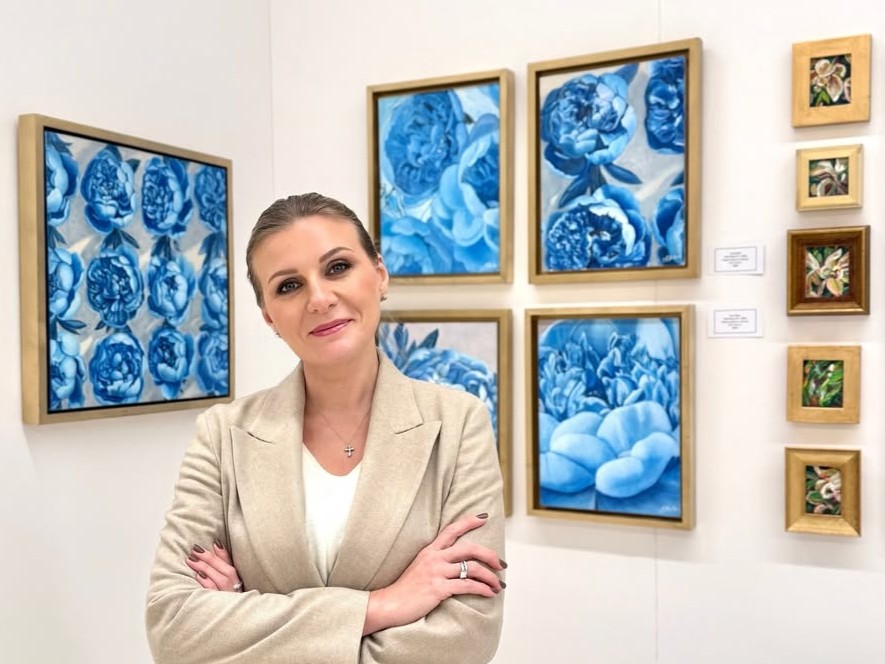
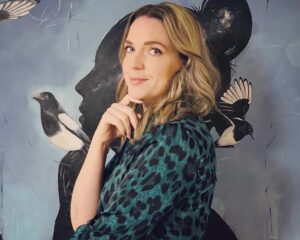
Conceptual visual artist Irina Metz explores themes of conscious happiness, inner freedom, and the tension between reality and longing in her work. Combining painting, digital, and mixed media, she creates a rich visual language shaped by travel, cultural encounters, and universal symbols. We spoke with Metz about her artistic practice, sources of inspiration, and her journey in art.
– For our readers who may not be familiar with you yet, could you briefly introduce yourself?
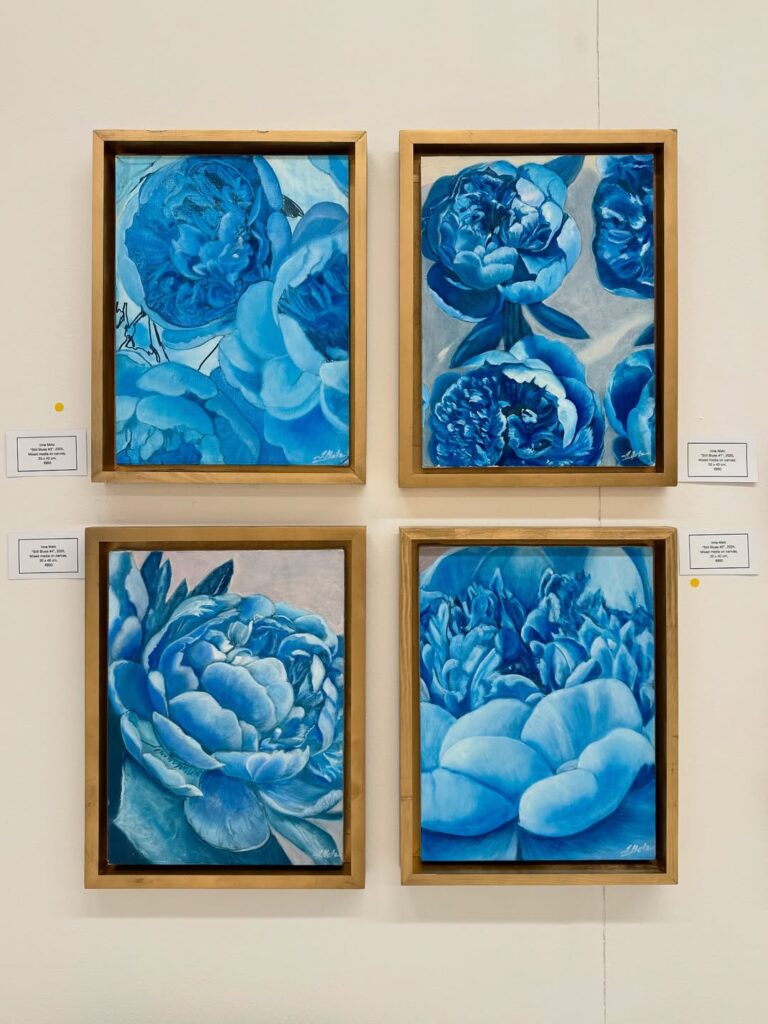
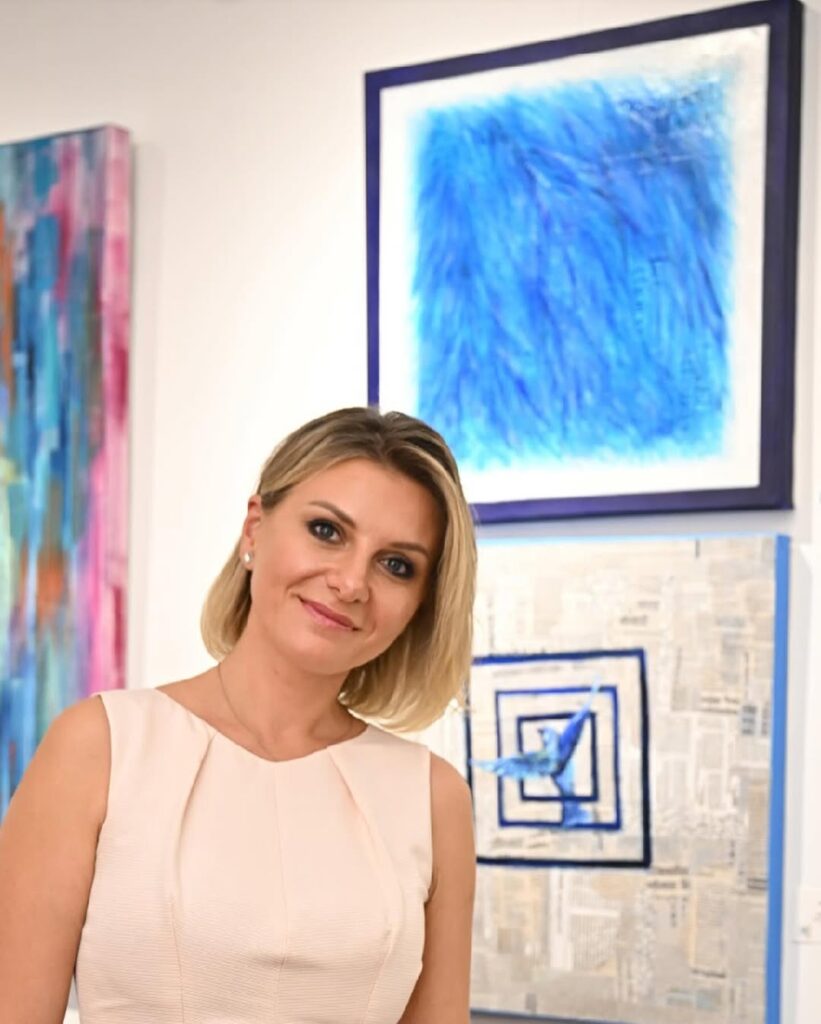
My name is Irina Metz, I’m a conceptual visual artist working mainly with painting, digital and mixed media. My work revolves around the ideas of conscious happiness and elusive paradises, the tension between what is real and what we long for. I’m deeply inspired by intersections of cultures and philosophies across centuries and counties, but I also live very much in the intensity of the present moment, in a world saturated with generated images, imposed opinions and constant changes. The symbols that often appear in my works and link them to universal connotation of happiness, fragility and inner freedom are blue flowers and blue birds, which happen to bear this meaning in many mythological paradigms from Native American tribes to European Romantisme.
– You recently participated in the Los Angeles Art Show. What does taking part in this fair mean to you?
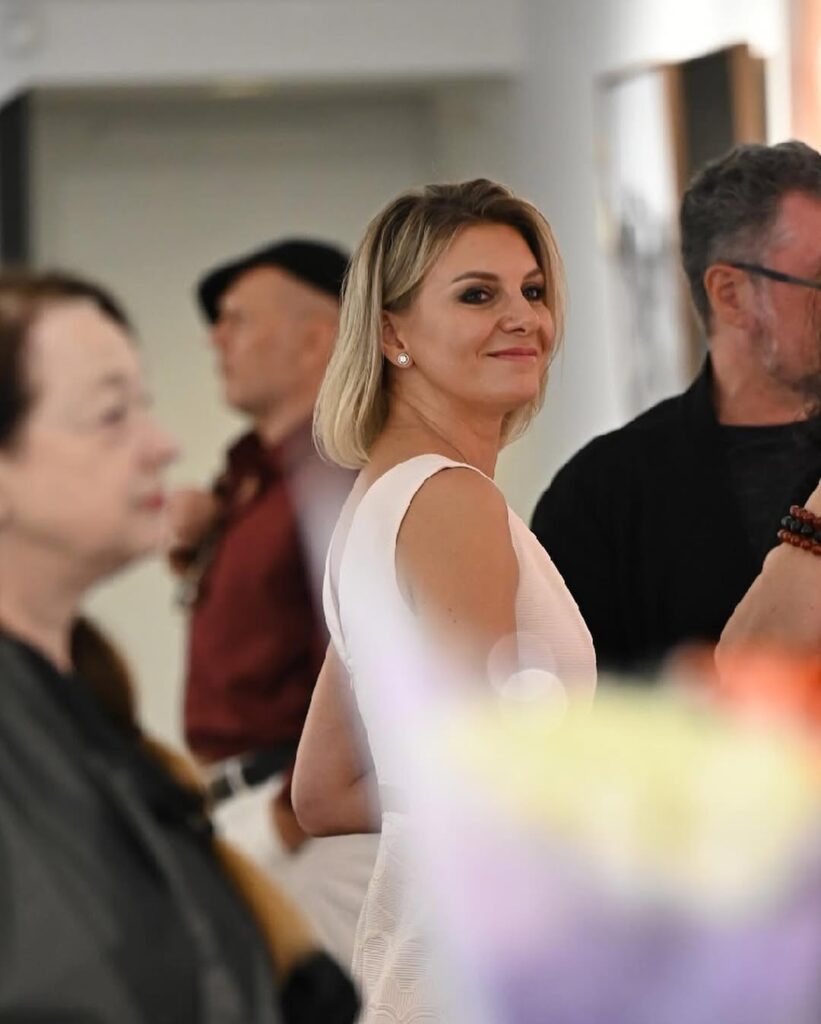
It was my second year in a row taking part in the Los Angeles Art Show. This time it felt even more special, as it wasn’t only about showing the work, it was more about listening and observing. I felt that the conversations mattered as much as the visibility. There is a growing interest in depth and coherence, not just surface aesthetics. It was encouraging to see that audiences are looking for artists who can articulate why and how they work, not only what they produce.
– I have noticed that you frequently emphasize themes of transformation and consciousness in your works. How are these themes connected to your personal life?
I must say that all themes that I explore through my art are always from closely connected with what I observe, experience and feel. My life has always been shaped by movement between countries, cultures and roles. This kind of impermanence makes you treat everything from a less subjective perspective, embrace and respect various factors and points of view, teaches tolerance and empathy. Transformation, for me, is not dramatic. It’s subtle. It’s about becoming more aware. Consciousness means attention, the ability to observe yourself within change. My works often show dissolving forms, traces instead of figures, landscapes that feel slightly unreal. That reflects how I experience human identity, not as something fixed, but as something unfolding.
– What is the main emotion you would like viewers to feel when they look at your artworks?
I don’t want to impose a specific emotion. But I hope the viewer feels a pause. A quiet inner space opening, maybe a gentle longing. More like a recognition that the search itself is meaningful. That happiness is not a final destination, but a state of awareness.
– You have also visited Türkiye before. How has engaging with different cultures transformed your artistic language?
I have been travelling to different parts of the world a lot in the past 30 years. My favourite part of each trip has always been to get to know the people: the fundamentals of their mentality, their life values and historical background. Different cultures expand my visual language. They remind me that symbols are never isolated. Blue as a color, for example, carries meaning across many traditions from Mediterranean spirituality to Romantic longing. These resonances enrich my work. In Türkiye, I was deeply fascinanted by the layers of history, how ancient architecture and toponymes keep the traces of the bygone eras and coexist with very vivid contemporary life. I fell in love with particular richness of colors, flavors and ornaments.
– We can see that you enjoy traveling. In your opinion, is traveling a source of inspiration for an artist or a necessity?
For me it’s both. Travel sharpens perception. When you’re outside your routine, you see more clearly. But inspiration doesn’t only come from geography. Inner travel like reading, attending international exhibitions and lectures can be just as powerful. What matters is movement. Stagnation is the only real danger.
– What advice would you give to young artists who want to connect with an international audience?
Don’t rush visibility. Build depth first. The audience responds to authenticity and structure. Know why you make each decision in your work. Be ready to explain your process. And stay patient. Trends change quickly, while strong inner logic travels much further.



Be First to Comment