
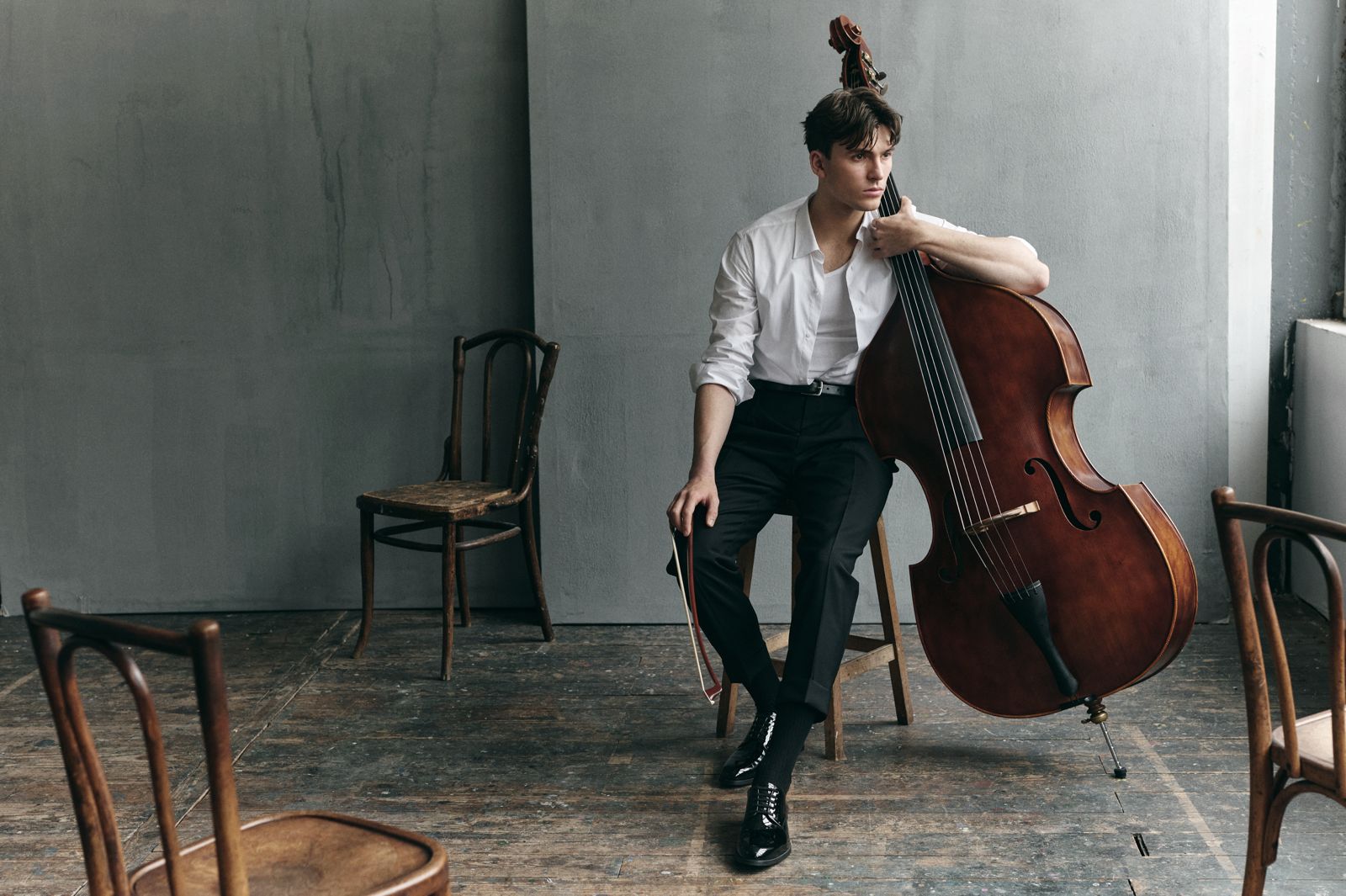
–Mirage presents a repertoire that ranges from the lied tradition to film music. When shaping this selection, what guided your choices more: emotional continuity, stylistic contrast, or the intention to reveal the different expressive possibilities of the double bass?
What I wanted more than anything is to present the double bass to new audience members. I am sure that for many, it will be a discovery and they have rarely heard a double bass as a solo instrument, I wanted to show how lyrical the bass can sing, without missing out on the fire that the tango represents.
–Critics have described your sound as “exquisite and elegant,” and in Mirage, particularly in works by Dvořák and Debussy, this approach seems to take on an almost vocal quality. Considering your early musical background on the violin and cello, how do you cultivate this “singing instrument” approach in both technical and interpretative terms?
I’ve always wanted to sing… on my instrument. For me, the way a singer is shaping a musical phrase is what has drawn me to making music myself as a child. I’ve always wanted to make big, beautiful lyrical phrases and am fascinated by what is possible. When I play, I always try to sing inside of my head. Of course one has to find a way to make it possible with the technical boundaries that we bassist have, but it is definitely a fulfilling way of making music. I always thought to myself : just because I am a bassist doesn’t mean I can’t sing.
–The inclusion of composers such as Morricone, Umebayashi and Piazzolla adds a distinct cinematic layer to the album. How would you explain the double bass’s ability, as an instrument traditionally associated with the orchestra, to adapt so naturally and flexibly to the language of film music?
I always wondered what these cinematic masterpieces would sound like on the bass, and I think it definitely gives it its own identity. I think that the double bass is such an important music in the orchestra, and to hear it have a more lyrical and cantabile function is definitely an addition to the orchestral double bass world.
–When thinking about the title Mirage and the album’s cinematic character, how do you approach musical storytelling, and what kind of narrative world did you intend to invite your listeners into?
I love to take audiences on an adventure, and make them travel with me musically. The goal is to explore emotions together, and sometimes even discover new ones. This was my idea with the album MIRAGE.
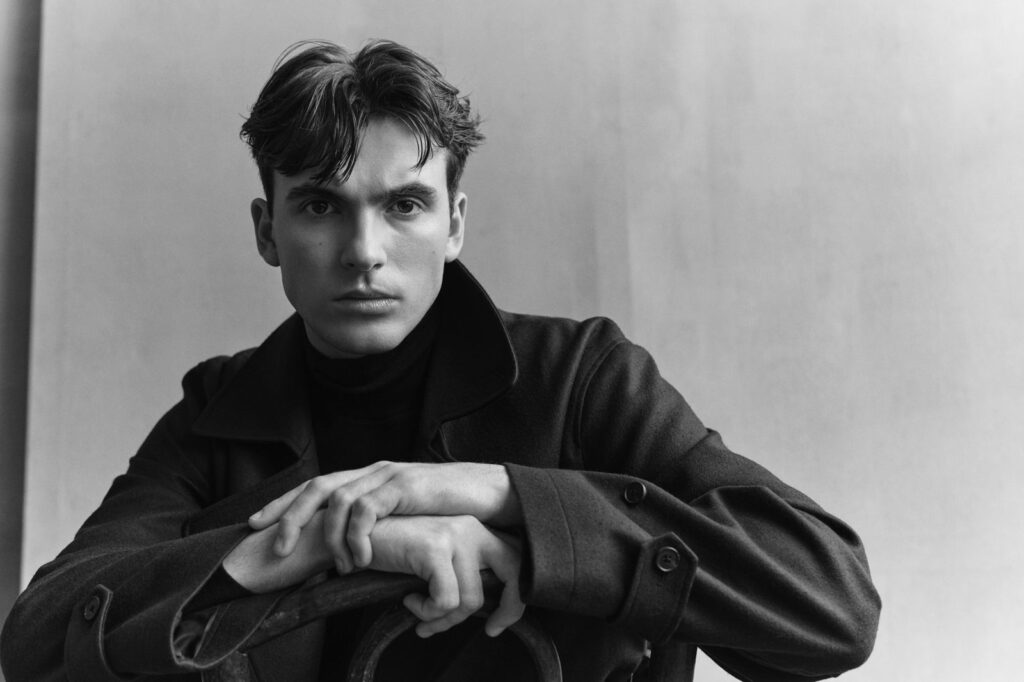
–Your repertoire moves between film music and a variety of different aesthetic worlds. Do your listening habits beyond classical music influence this approach in any way?
Oh definitely. At the end of the day, I’m also a 23 year old guy that has a life like many others. I listen to all sorts of music on the radio and am always looking for beauty in the sound, no matter the genre. I am musically very curious and take inspiration from many different art forms.
–You perform on an 1827 Martin Stoß double bass. How does the historical character of this instrument interact with the modern or contemporary repertoire featured on Mirage?
I do perform on the Martin Stoß Bass occasionally, but I actually recorded this album with my newest double bass by Jean Auray, built for me in 2024. it is an incredible instrument full of capabilities, and like me, still on a path to find itself. I am discovering different colors every day and I remember that even during the recording session in Vermont I was finding out new colors. I just love it.
–Your exclusive agreement with Warner Classics has been described as a landmark moment for the double bass. How do you view this process today, both in terms of your own career and the position of the instrument within the classical music world?
I think it definitely is a big step for the double bass world. Everything is always impossible until someone does it, right ? The idea of a solo double bass album with a major record was always something that I have dreamed about, and kind of like a Mirage, it was a blurry vision that has followed me my entire life. For this dream to finally come alive is also a testament to everyone, to show that anything in life is possible, no matter how absurd.
-2026 appears to be an intense year for you, with your debut album and performances on major international stages. Beyond these visible achievements, when you are alone with your instrument, what does that relationship remind you about the essence of music?
It is indeed, 2026 is definitely an exciting year for me. For me, when I find myself alone with my bass, in a quiet room, I always think about the very beginnings, and my approach hasn’t changed since I was a kid. I want to create beautiful music and touches peoples hearts and make them feel deep emotions. Even if just for a few seconds..
Connect with Marc André
Explore Marc André’s music, social media channels and latest updates:
Marc André Links & Socials







Be First to Comment