
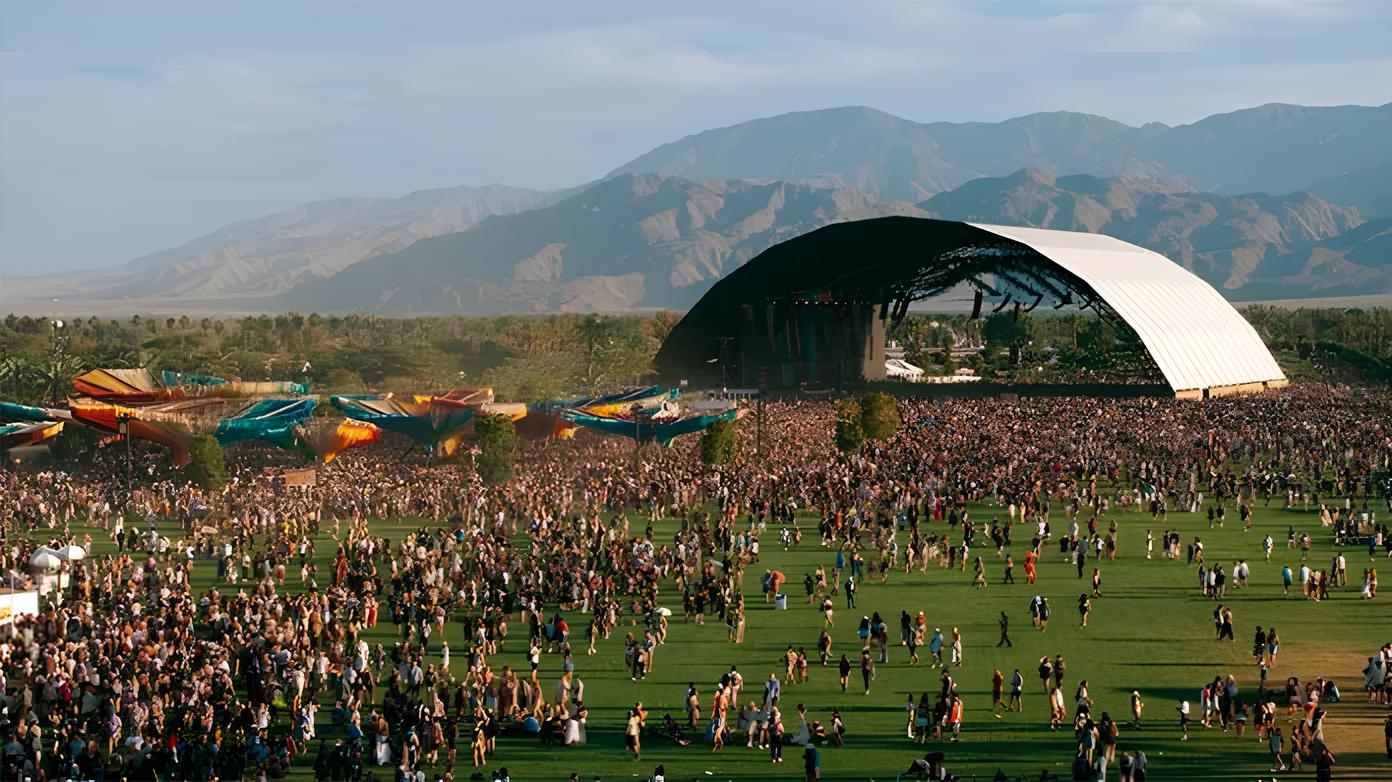
The first weekend of Coachella 2026 once again reminded us that the festival is no longer experienced solely on stage. This year, as much as the performances themselves, the way those performances were received on social media shaped the direction of the second weekend. Coachella now operates as a multi-layered experience: on one side, the physical festival taking place on-site; on the other, a simultaneous digital festival constructed through commentary and critique across platforms such as YouTube livestreams, X, TikTok, and Reddit. I approached this piece as a digital observer, focusing on the gap between what happens on stage and how it is perceived on screen.
Main Stage: Between Spectacle and Introspection
This year, presentation aesthetics were at the forefront. Sabrina Carpenter did not build her set as a conventional high-production pop show; instead, she adopted a narrative-driven and theatrical language that updated Coachella’s tradition of the “big show.” The flow, costume transitions, and staging created a sense of episodic storytelling rather than a linear concert.
A brief moment from the first weekend, interpreted differently across cultural contexts, quickly escalated into widespread reaction on social media. Carpenter’s response divided audiences into those who accepted her apology and those who did not. Some viewers even compared the audience engagement seen in other artists’ concerts with Carpenter’s more self-centered stage approach.
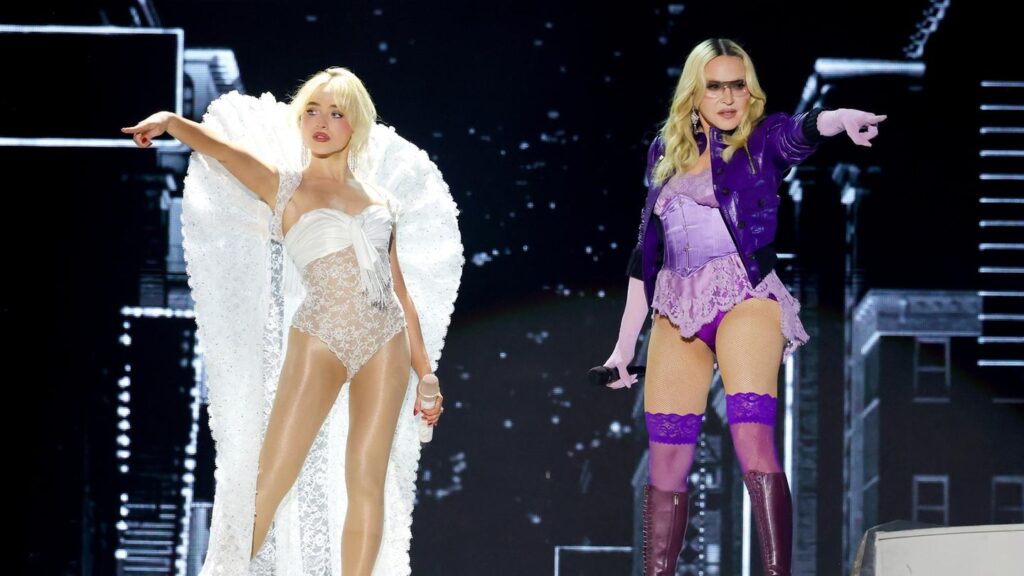
By the second weekend, however, her focus had clearly shifted back to performance. Her appearance alongside Madonna, performing “Like a Prayer” and “Vogue,” became one of the most memorable moments of the festival.
There was also news that costumes Madonna wore on stage selected from her personal archive had gone missing, prompting her to publicly call for their return.
In contrast, Justin Bieber made an opposite choice on the same stage during the first weekend. His minimalist setup and low production were not merely an economic simplification, but rather a deliberate redefinition of distance between artist and audience. At times referencing his past, particularly his own digital archive, the performance shifted away from spectacle and closer to a space of personal confrontation.
While some interpreted this as lack of effort, what emerged instead was a more intimate stance. For an artist who has sold his catalog rights and entered a different phase of his career, it felt like a return to the beginning a recognition of his earlier, more fragile but authentic self. The stage became a site of open reconciliation with the past.
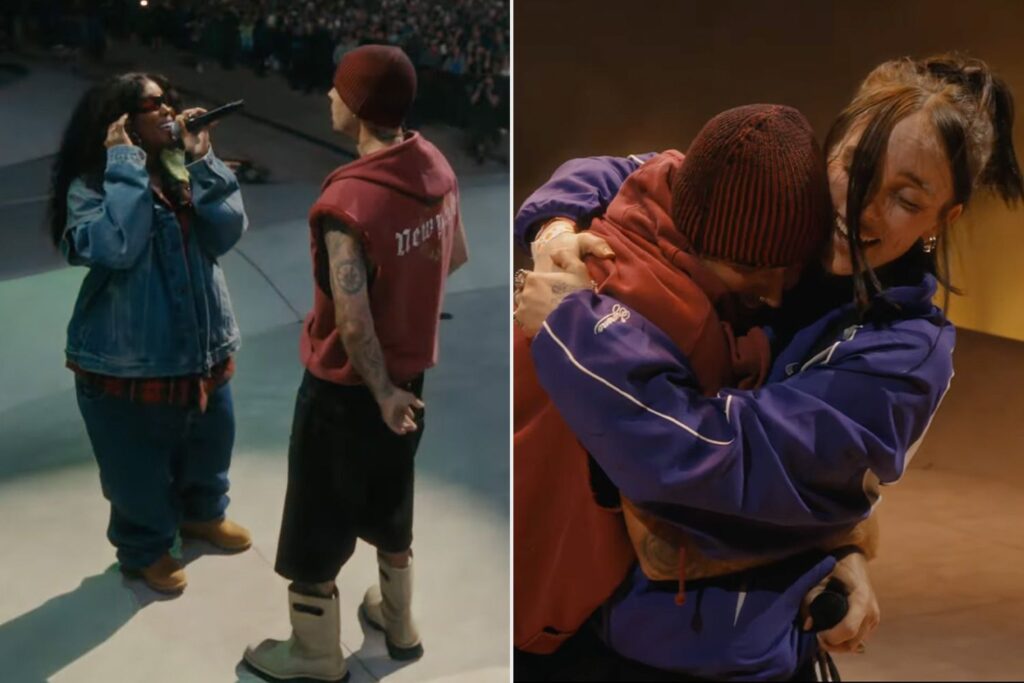
One of the standout moments of his second weekend came during “One Less Lonely Girl,” when Billie Eilish was invited from the audience to the stage. Traditionally, this segment features a fan, but replacing that role with another artist gave the moment a different dimension.
Rather than a conventional duet, it felt like a temporary role reversal. Eilish, known to have been a Bieber fan since childhood, visibly carried the emotional weight of the moment, creating a tangible sense of connection with the past. It became one of the most sincere highlights of the festival.
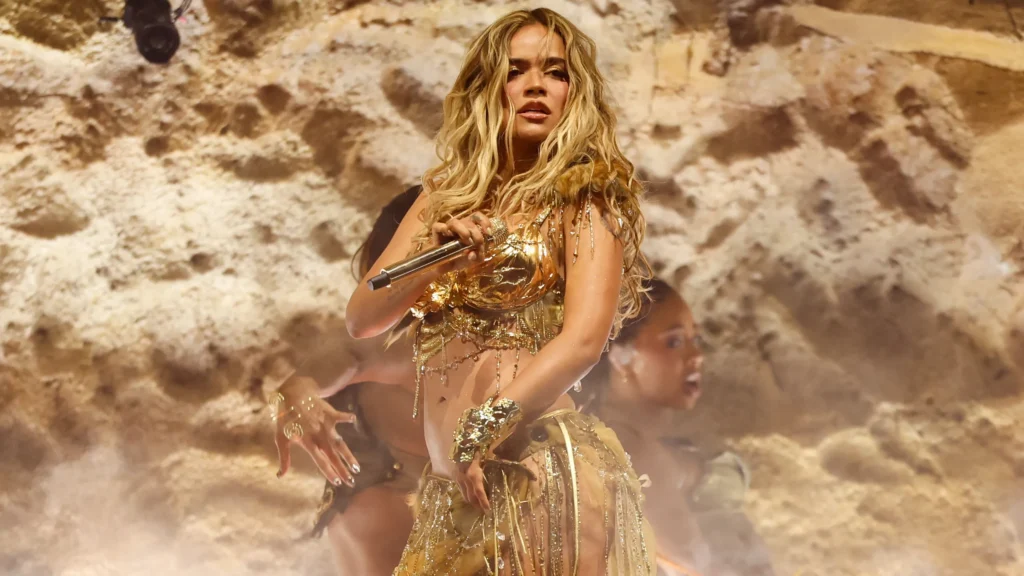
Meanwhile, Karol G responded directly to discussions around “lack of hype.” With a nearly full main stage, high audience participation, and dance-driven moments quickly circulating online, her performance translated effectively into both physical and digital spaces. While some performances were debated in terms of distance, Karol G’s approach emphasized direct engagement and energy.
By the end of the first weekend, a key question emerged:
Is Coachella still a space for producing spectacle, or is it equally open to personal narratives?
The second weekend demonstrated that there is no single answer. While Sabrina Carpenter expanded her narrative into an iconic, large-scale performance with Madonna, Justin Bieber eliminated the physical distance between himself and the audience. His duet with SZA transformed the previously criticized detachment into emotional proximity. The same platform was reconstructed in entirely different ways across two weekends.
Debates: Not the Performances, but Their Interpretation
The defining element of the first weekend was not the performances themselves, but the discussions surrounding them. Opinions on Justin Bieber split between “sincere minimalism” and “underwhelming headliner.” Repeated digital critiques such as “low energy” and “lack of peak moments” shaped how his set was perceived.
In the second weekend, Bieber demonstrated how perception could shift. By entering the audience and performing among them, he altered not the structure of the performance, but its reception.
Sabrina Carpenter’s controversy, on the other hand, did not carry into the second weekend. A moment that had been misinterpreted across cultural contexts was quickly contained through her response, reinforcing a key reality: today, the risk lies not in making a mistake, but in failing to manage it.
KATSEYE sparked ongoing debate across both weekends: is this K-pop, or a hybrid structure designed for global pop? Meanwhile, LISA’s appearance in Anyma’s set for “Bad Angel” highlighted K-pop’s evolving relationship with electronic music. The stage design built around digital structures and character-driven visuals offered a technologically constructed experience that many live viewers described as unprecedented.
The tempo debate surrounding The xx became one of the clearest examples of Coachella’s dual-layered nature. Short clips on social media labeled the set as “too calm” and “low energy,” while critics who experienced the full performance praised its minimalism and atmospheric depth.
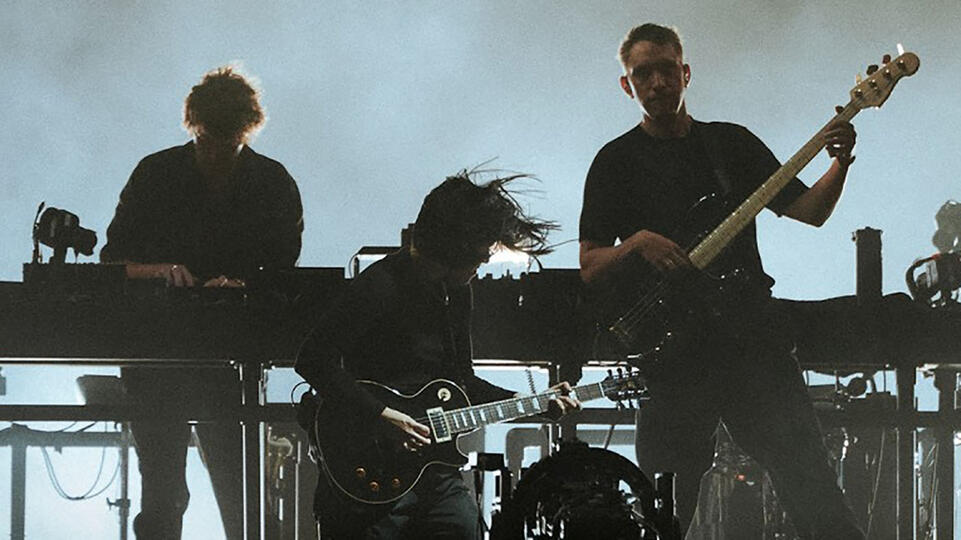
This mirrored the earlier divide seen with Justin Bieber: different modes of viewing led to entirely different interpretations.
The distinction ultimately lies in the viewing format. Digital audiences seek immediate impact through short clips, while on-site audiences engage with the continuity of atmosphere.
K-Pop: Generations on the Same Stage
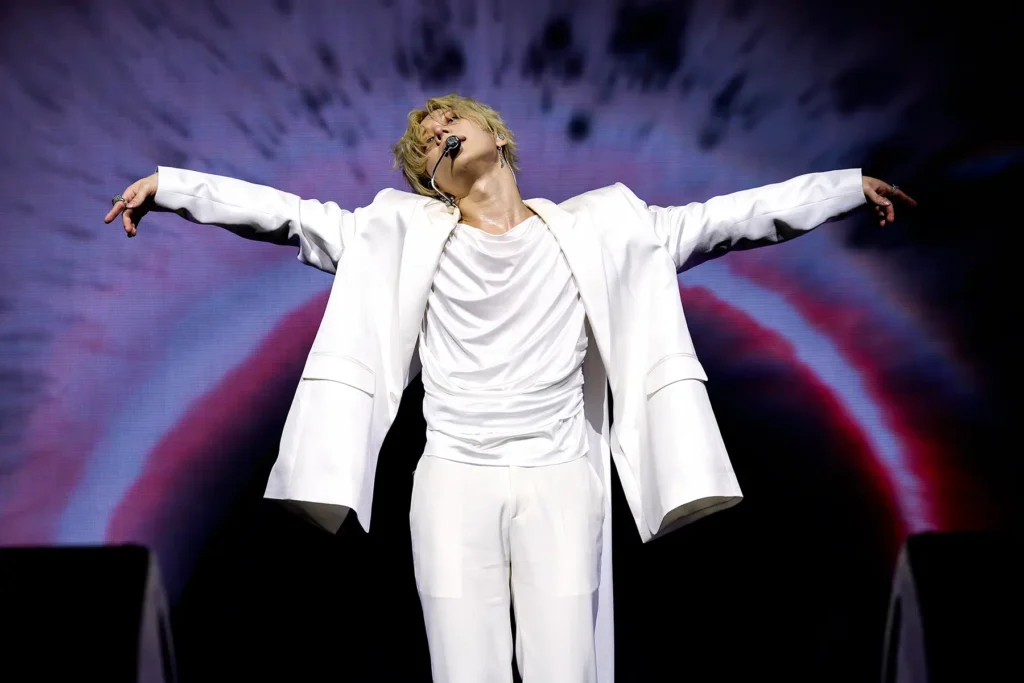
Taemin embodied the discipline of K-pop through his technically flawless performance and refined aesthetic. His consistency across both weekends reinforced his reputation as an “idol’s idol.”
As a member of SHINee, one of the key representatives of K-pop’s second generation, his stage presence reflected years of accumulated experience.
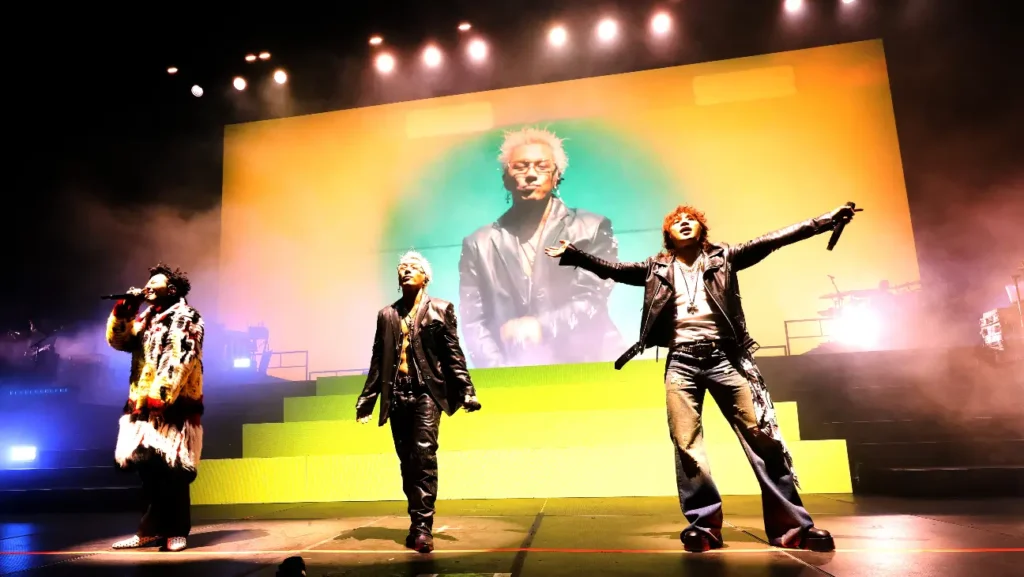
BIGBANG emerged as one of the most striking acts across both weekends. Celebrating their 20th anniversary, the group demonstrated their enduring influence.
As pioneers of K-pop’s second generation, their musical diversity, stage language, and strong individual identities have shaped subsequent generations. In particular, G-Dragon’s impact on music, fashion, and style remains integral to the concept of the modern K-pop idol.
The renewed visibility of former member T.O.P through his acting career further illustrates the group’s cross-industry influence.
While the first weekend felt like a tribute to the past, the second weekend transformed the experience entirely. The presence of fans with lightsticks and their full participation created an atmosphere closer to a dedicated BIGBANG concert than a festival performance.
This response has also mobilized the Korean music industry. Major companies such as HYBE, SM Entertainment, YG Entertainment, and JYP Entertainment along with Kakao Entertainment and CJ ENM are reportedly preparing a global festival that could surpass Coachella, with a planned launch in 2027.
Returns: Not Nostalgia, but the Weight of History
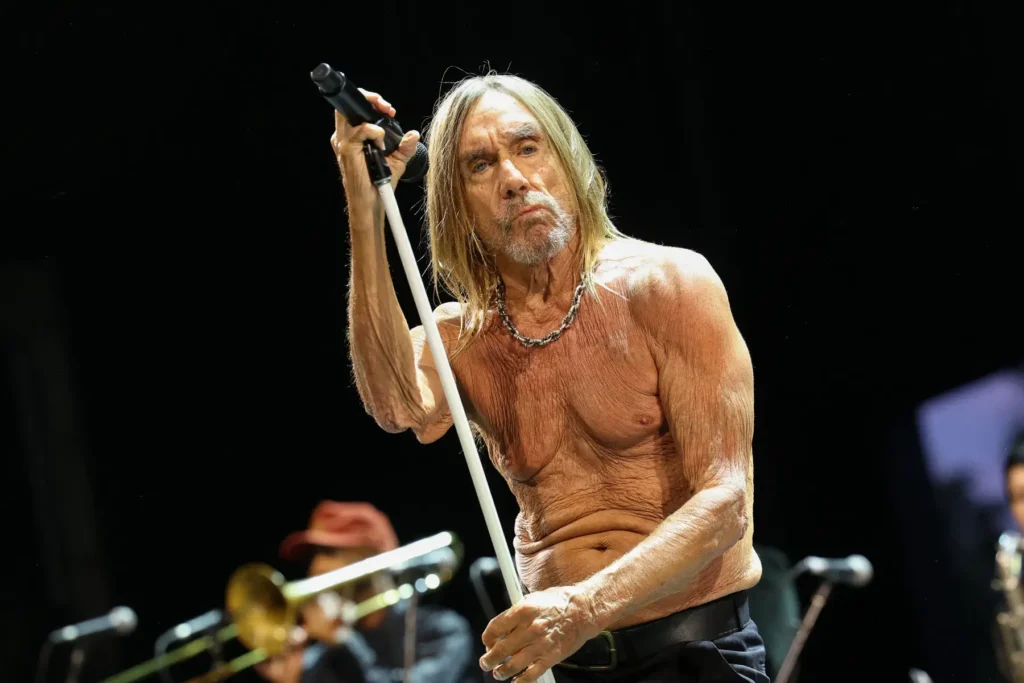
Iggy Pop, Moby, and BIGBANG formed the festival’s historical backbone. Iggy Pop maintained his energy and used theatrical elements to transform his set into a visual narrative. Moby expanded the boundary between DJ set and live performance in favor of live music.
This lineage extended through artists like The Strokes, Interpol, and Jack White. While rock remained strong on-site, it did not generate the same digital impact.
The Strokes’ closing performance stood out with a video montage referencing U.S. foreign interventions and controversial political actions, including imagery from Gaza and Iran. This moment moved beyond music into direct political expression, marking one of the festival’s most striking and debated interventions.
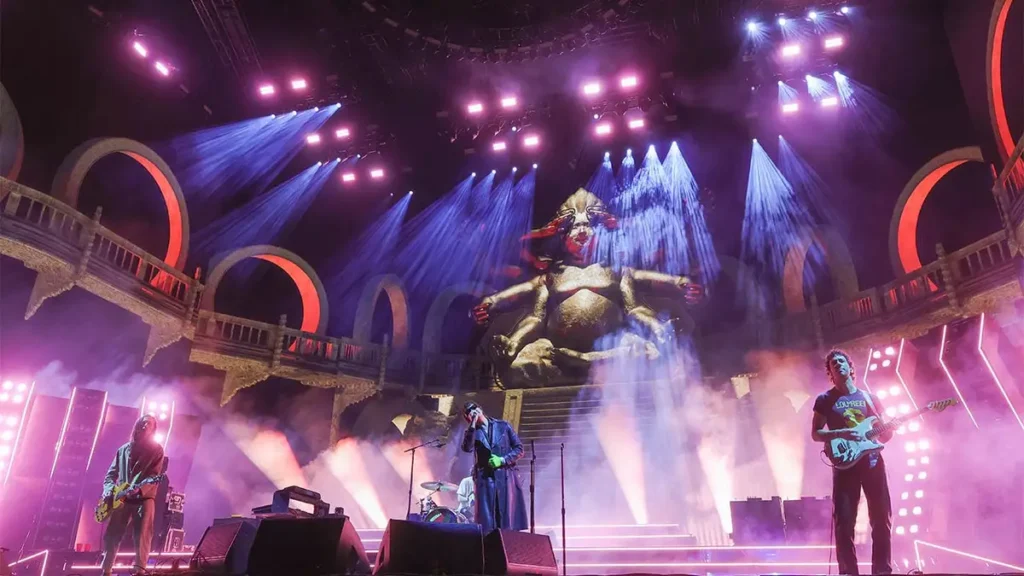
At this point, a clear pattern emerged: the impact created on-site does not always align with the one that circulates digitally.
Performance power and algorithmic power are no longer the same.
Off-Stage Reality
The cancellation of Anyma’s first weekend set due to strong winds triggered discussions about the festival’s scale. Two recurring questions dominated digital discourse:
Has Coachella grown too large?
Has production reached its limits?
These questions expanded the discussion beyond performances to the sustainability and structure of large-scale festivals. The balance between visual production and safety became a central concern.
During the second weekend, these concerns did not disappear but were reframed. The collaboration with LISA helped reintroduce Anyma’s presence, filling the gap left by the canceled production through a different narrative.
This highlighted another reality: Coachella is shaped not only by planned performances but also by unexpected disruptions and how they are managed.
What Remains After Coachella 2026
The first weekend was a space of interpretation.
The second weekend was a space where those interpretations were tested.
What remains is not merely the sum of performances, but the widening gap between what is created on stage and how it is reconstructed digitally. Today, the value of a concert is determined not only by its immediate impact, but by how it is remembered, shared, and reproduced.
The on-site experience and the screen-based perception no longer operate on the same plane.
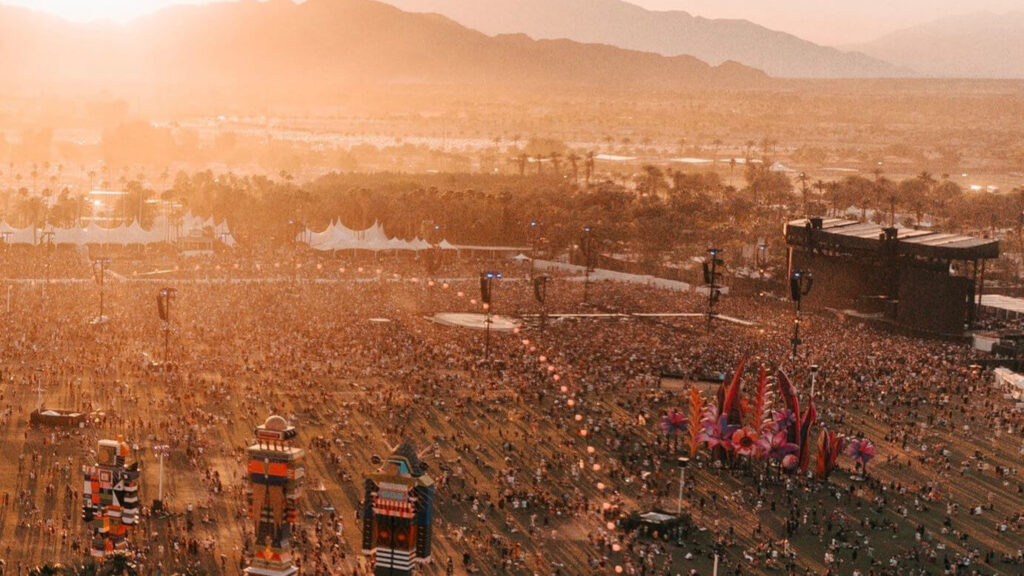
For this reason, Coachella can no longer be evaluated solely as a music festival. It is a multi-layered cultural field, produced, interpreted, and reshaped in real time.
This layered structure extends beyond the main stage. Artists like PinkPantheress and Addison Rae reflect a music culture shaped by short-form content, while Laufey and Labrinth open space for slower, more introspective performances within this fast flow.
At the same time, the inclusion of artists such as Creepy Nuts, Fujii Kaze, and Joost Klein signals that Coachella is no longer a Western-centric festival, but a platform where diverse musical geographies intersect.
And as with everything else, what happens on stage and what is remembered are never quite the same.
Link to Original Article:









Be First to Comment