
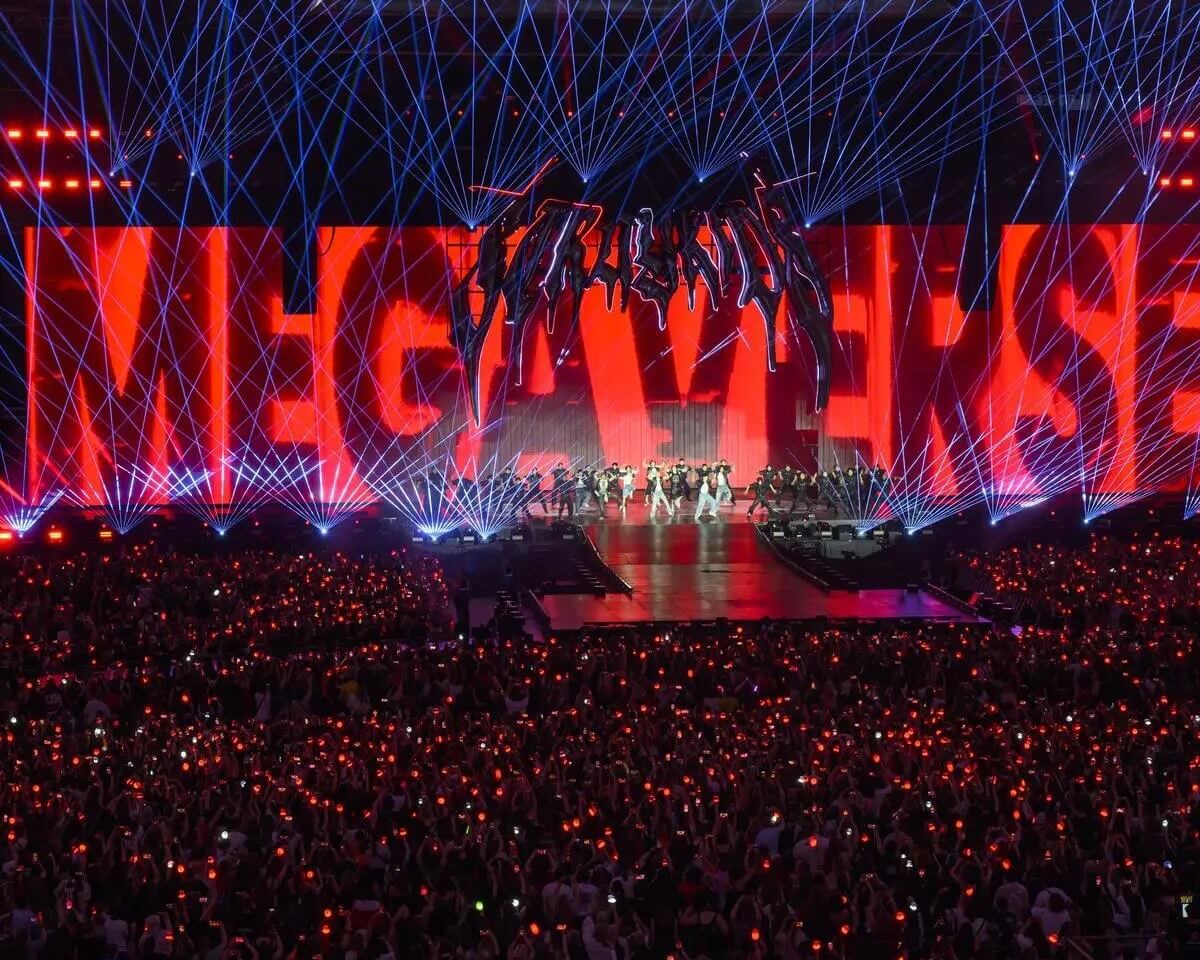
Stray Kids is not just a band I love—it marked the turning point where I truly discovered K-Pop and left all my prejudices behind. For years, I observed the global storm created by BTS, Blackpink, and others from a distance, never wanting to dive in—quite the opposite, I always rejected it. That changed when a musical bridge formed between my daughter Nil and me. Thanks to Nil, who has a remarkable ability to recognize good music across all genres, I was introduced to quality examples of K-Pop. Before I knew it, what we shared had gone far beyond music. We started watching videos together, decoding lyrics, following performances, and enjoying member content. Stray Kids soon became the center of this shared universe.
It was especially Felix’s deep voice—so at odds with his appearance—that initially caught my attention. But over time, my interest extended to the entire group. (Anyone assuming Felix is my bias based on this would be wrong! I chose Hyunjin because, in addition to music, dance, and modeling, he’s also talented in painting and often visits art museums during tours.)
As a result, Stray Kids became a group we follow in every aspect—from song lyrics and group dynamics to commercial deals and achievements.
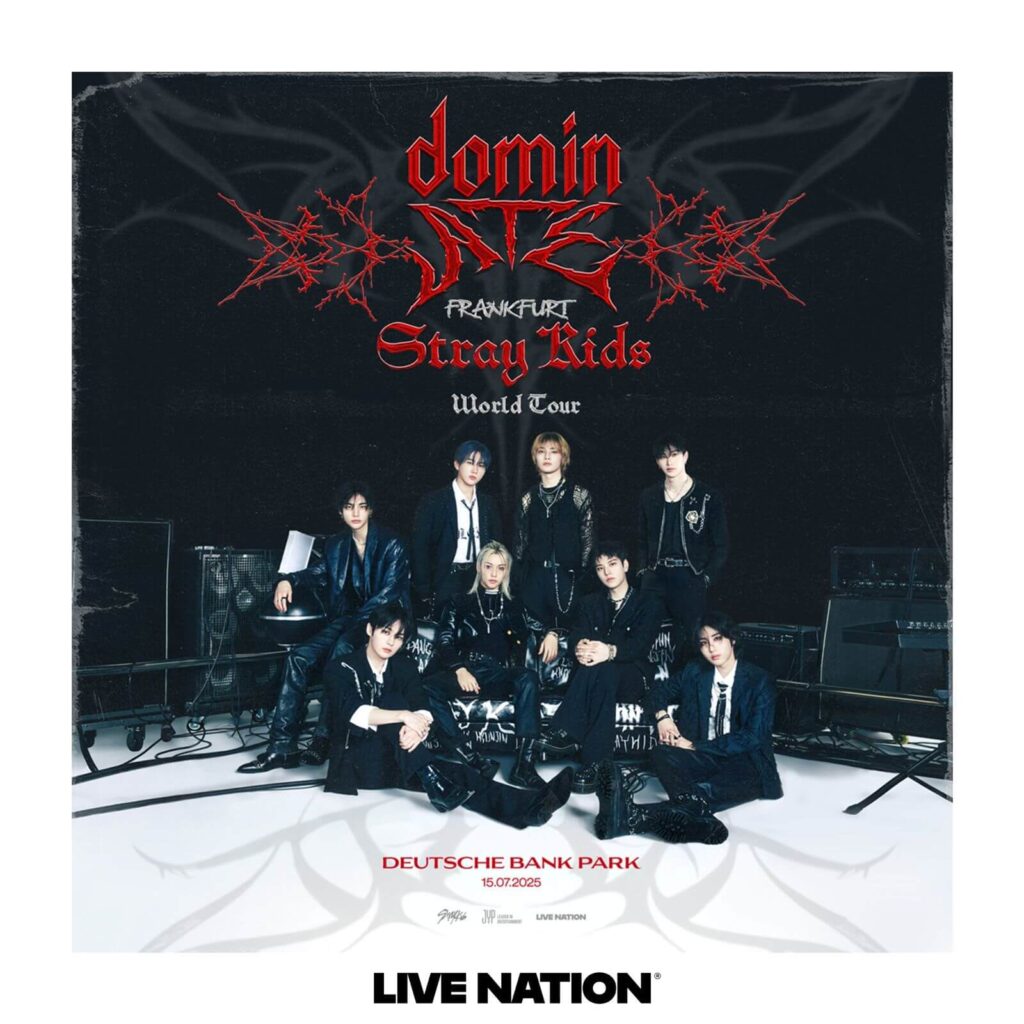
That’s exactly why their Frankfurt concert, part of the DominATE 2025 World Tour, was a concert worth writing about. The Deutsche Bank Park Stadium began filling up early in the day. Fans arrived in carefully curated red-black themed outfits—the official tour colors—along with lightsticks, handmade accessories, and SKZOO plushies. The atmosphere was far beyond just a music event.
Before the show, clips featuring other JYP artists were projected on screen. The crowd erupted, especially for J.Y. Park and Twice. I was surprised by the amount of cheering for JYP’s newest group KICKFLIP, which even outshone some well-established acts.
I also attended the special pre-concert soundcheck. Although I wasn’t backstage this time (like I was during the 90s in Turkey), I realized how much I missed this atmosphere even as a regular audience member. Despite the fact they were about to perform for over 50,000 fans, the members were sincere and down-to-earth, performing three songs in a casual, intimate manner. No recording was allowed during this segment, and security was strict. Still, most attendees respected the rule.
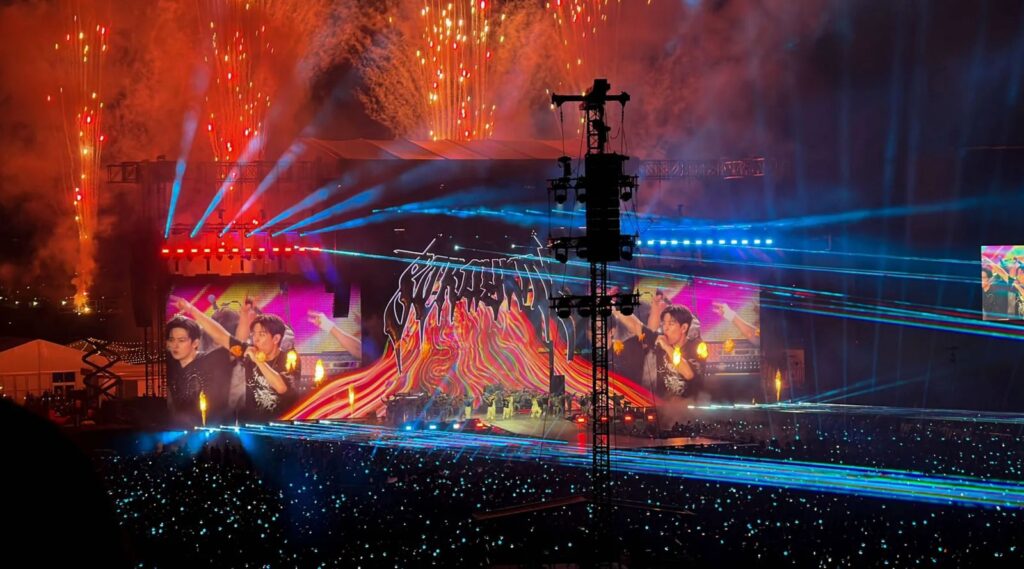
This was my second K-Pop concert, but my first time attending as a fan already familiar with the group’s songs and members. That made a huge difference. The setlist kicked off with “Mountains,” peaked with “Chk Chk Boom,” and included hits like “Thunderous” and “Topline.” Every detail—stage design, lights, choreography—was so polished that each song felt like a live music video.
The group performed for nearly 3.5 hours with unwavering energy. Toward the end, a surprise fan video montage began playing—compiled months in advance through fan submissions. The members sat on stage and watched, visibly moved. Another fan project, the “Heart Event,” involved identical paper hearts with the same printed message held up simultaneously across the stadium. It was powerful—a collective effort as impactful as the concert itself.
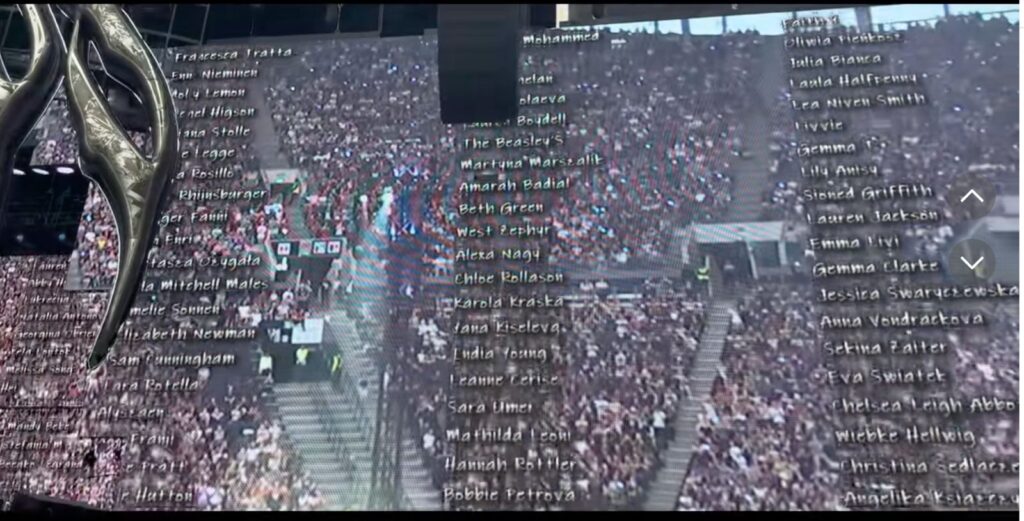
Another unique element was tied to the song “Cinema,” performed by Lee Know and Seungmin. An online form allowed fans to submit their names, which were displayed on screen like film credits. Although I couldn’t spot my name, just knowing it was there gave me a thrill. It was a small but meaningful reminder that Stray Kids sees fans as part of their story, not just passive viewers.
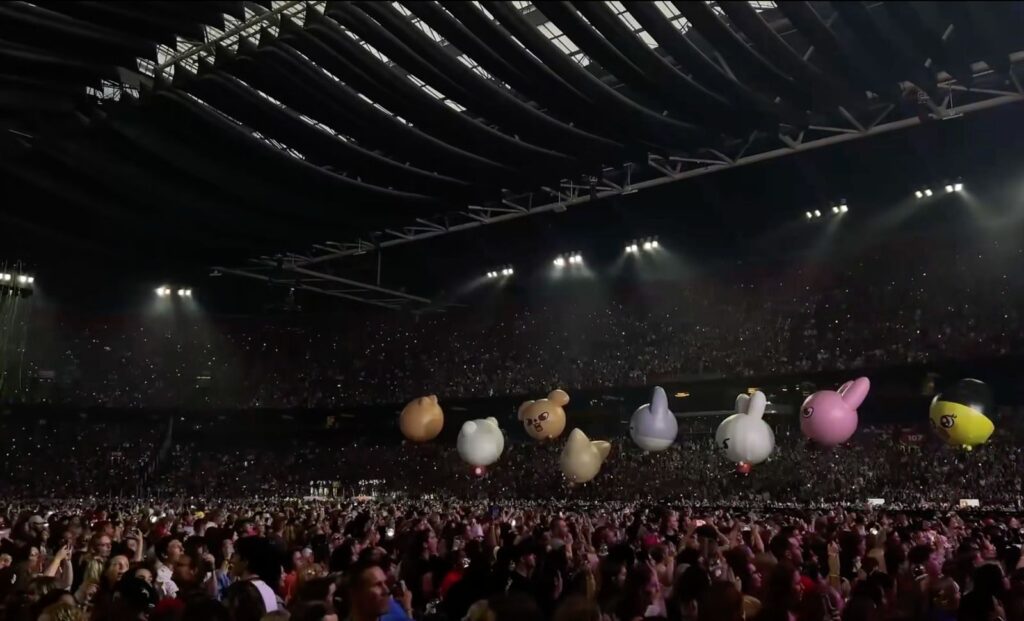
As the concert neared its end, the group made a lap around the stadium in vehicles, split into pairs. Giant SKZOO character balloons followed them, and the lighting, combined with the fans’ lightsticks, created a magical, layered visual effect.
One striking detail was how the members, including Bang Chan and Felix (who are native English speakers), chose to speak mostly in Korean on stage. It felt like a subtle declaration: “We are Korean, and this is our cultural expression.” Their words were translated into German for the audience. While some mispronunciations sparked laughter, the message was clear: K-Pop retains its linguistic identity, acting as a cultural ambassador on the global stage.
Another remarkable aspect was the presence of parents in the crowd. Many, like me, accompanied their children—and not just passively. They danced, sang, and engaged fully. Bang Chan even asked parents to raise their hands at one point, and many did (myself included). K-Pop achieves something few genres do: it creates a shared space between generations. It’s not just about rhythm or melody—it’s storytelling, aesthetics, and inclusivity.
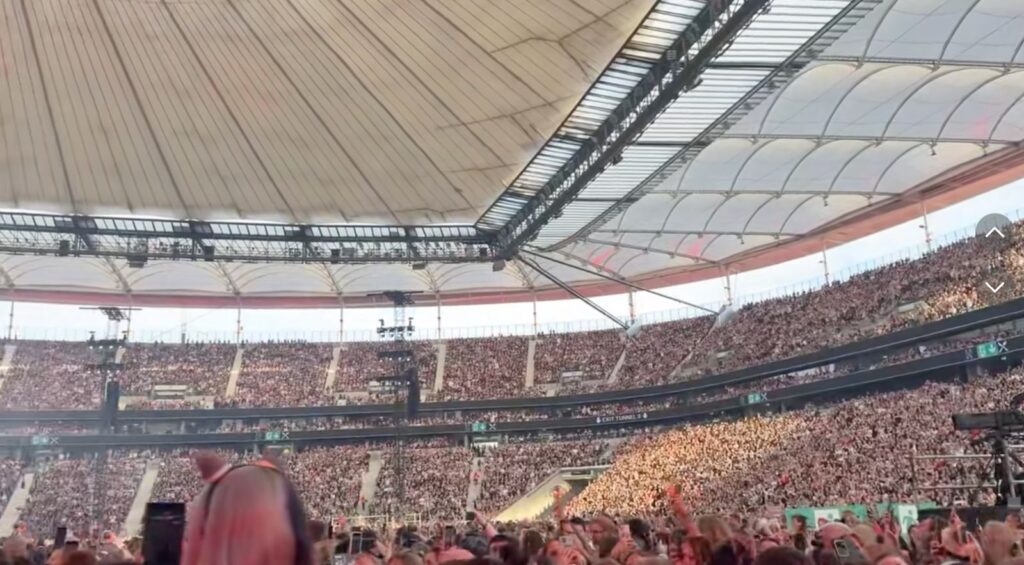
Stray Kids didn’t just reinforce their success with this concert—they opened a new chapter in K-Pop’s strategic expansion in Europe. They became the first Asian act to headline a solo concert at Germany’s Deutsche Bank Park—a venue that previously hosted Beyoncé, Ed Sheeran, Coldplay, and Kendrick Lamar. That alone proves K-Pop’s place among global mainstream stars.
Reflecting on the concert’s production scale, I realized how the late sunset in Germany slightly diluted the impact of early-stage lighting effects. As night fell, the atmosphere transformed completely, moving from a summer festival vibe to a dramatic concert setting.
What we witnessed wasn’t just a music show—it was the result of enormous investment and discipline. The sound system was pristine, even beyond the stadium’s perimeter. Videos of fans listening from 1.5 km away circulated on social media afterward. Every technical element—from acoustics to calibration—was meticulously handled.
Behind the music and visuals was a well-oiled machine. The stage, dancers, live orchestra, technicians, and backstage crew operated like a factory designed to deliver not just a concert but a complete sensory experience.
The DominATE Tour doesn’t just showcase global K-Pop success—it shows how this music touches people personally. It’s collective euphoria infused with individual stories. And for me, it was a musical encounter that happened exactly how and where it should have.
I noticed similar elements at the ATEEZ concert I attended earlier. While Stray Kids’ concert was on a larger scale, both shared the same immersive, synchronized storytelling style—transforming the audience from spectators to participants.
This system is no coincidence. Almost every K-Pop group follows this production discipline. They often bring their own teams on tour, ensuring control over every detail. What’s on stage is only part of it; the rest travels in countless suitcases.
Ultimately, what we witnessed was the product of serious investment. The lights dimmed, but the machine behind the show left a lasting impression.
These international concert experiences inevitably make me compare them with Turkey’s live music scene. It’s not just about money. What we lack is a production mentality and a long-term vision. Many experienced figures were pushed out of the industry, while others turned it into a nepotistic, small-circle operation. As a result, our music sector spends more time fighting for scraps than building something lasting.
I’ve written before that the K-Pop industry’s dominance is no coincidence. It reflects what they have—and what we often lack. Despite some recent efforts to emulate them, we have a long way to go. I hope these experiences at least inspire us to aim higher.
Having been in the industry since my youth, I don’t fall into fandom easily. But I deeply appreciate talent and hard work, and I try to support what’s truly valuable. Stray Kids deserves that appreciation—for their persistence, dedication, resilience, and the impressive journey they’ve taken to get here.




Be First to Comment